Getting the meeting is access. It is not alignment.
The meeting gives you a seat in the room. Your preparation determines whether decision-makers see you as a capable resource, a course vendor, or a strategic partner.
If you are an expert-led professional or course creator, that distinction matters. Companies do not buy training because the content is interesting. They buy it because the training fits a business priority and can produce a clear outcome.
The Meeting Is Not a Showcase
Many course creators prepare for organizational meetings by building a catalog of capabilities.
They explain that they can:
- Build online courses
- Facilitate workshops
- Create videos
- Design assessments
- Develop microlearning
- Set up an LMS
- Customize content
- Support certification or continuing education
All of that may be true.
But a list of capabilities does not answer the questions HR and L&D leaders are responsible for answering:
- What problem does this solve?
- Why does the organization need to address it now?
- What will improve if we invest?
- How will we measure progress?
- What will implementation require from our team?
A catalog places the burden on the buyer to connect your services to their business. Most buyers do not have the time, information, or internal alignment to do that work for you.
Your job is not to make them sort through everything you can do.
Your job is to help them see what should happen next.
How Companies Actually Buy Training
Training decisions are rarely made on content quality alone.
HR and L&D leaders evaluate how a proposed solution fits into the organization. They consider business goals, workforce needs, operational constraints, risk, budget, implementation time, and measurable outcomes.
A training program may be educationally strong and still fail to receive approval if it does not connect to a meaningful priority.
For example, an organization may not be looking for “a better onboarding course.” It may be trying to reduce:
- The time it takes for new hires to become productive
- Early-stage turnover
- The amount of manager time spent repeating basic information
- Inconsistent training across locations
- Errors caused by unclear procedures
Likewise, a compliance leader may not be asking for “engaging eLearning.” They may need to prove that every employee completed required training before an audit. They may need better reporting. They may need to reduce the administrative burden of tracking certifications and renewals.
The course is the delivery mechanism.
The business outcome is what earns attention.
Resources from SHRM on measuring training ROI and Harvard Business Review on evaluating learning and development initiatives reinforce the same point: training investments are stronger when they are connected to performance data, business goals, and measurable impact.
The Shift: From “Here Is What We Do” to “Here Is What I Recommend”
A strategic partner does not enter the meeting with a menu.
They enter with a point of view.
That point of view should be supported by three elements:
- Evidence
- A clear priority
- A recommendation
This does not mean pretending to know everything before speaking with the client. It means doing enough preparation to offer a useful starting perspective.
1. Bring Evidence
Evidence gives your recommendation weight.
It can come from several sources:
- Workforce data
- Employee surveys
- Completion or assessment records
- Turnover reports
- Audit findings
- Manager interviews
- Customer complaints
- Operational errors
- Existing training materials
- Industry or regulatory requirements
You do not need a 40-page analysis.
You need enough information to show that the issue is real and worth addressing.
For example:
“Based on the information shared, new hires are receiving different instructions from different managers. That inconsistency appears to be extending ramp-up time and creating avoidable rework.”
That is more useful than saying:
“We create customized onboarding courses.”
The first statement demonstrates that you understand the business problem. The second only describes a service.
2. Identify the Priority
Organizations usually have more training needs than they can address at one time.
Your role is to help narrow the focus.
Ask:
- Which problem is creating the greatest cost or risk?
- Which audience is most affected?
- What happens if the organization does nothing?
- What outcome matters most to leadership?
- What can reasonably improve within the next 90 days?
- What existing process or system must the training support?
The best priority is specific enough to guide a recommendation.
“Improve employee development” is broad.
“Reduce first-90-day turnover by improving role clarity and time-to-productivity for new hires” is actionable.
“Improve compliance” is broad.
“Create a trackable process that ensures all staff complete annual policy training before the audit period” is actionable.
A clear priority gives everyone in the meeting something to align around.
3. Make a Recommendation
Once you have evidence and a priority, recommend a path forward.
Your recommendation should explain:
- What should be built or changed
- Who it is for
- How it will be delivered
- What support is required
- What outcome it is designed to influence
- Why this approach makes sense now
A strong recommendation is not a product pitch. It is a reasoned response to the problem.
For example:
“We recommend replacing the current manager-led onboarding process with a role-based digital onboarding pathway, supported by manager check-ins and completion tracking. This would create a consistent baseline for every new hire while giving managers visibility into progress. The first phase should focus on the roles with the highest turnover and the longest ramp-up time.”
That recommendation is specific. It is also defensible.
It gives the client something to respond to, improve, or question.
That is how alignment begins.

Use a Meeting-Ready Brief
Before the meeting, prepare a short brief. Keep it to one or two pages.
Use this structure:
| Section | What to include |
|---|---|
| Current situation | What appears to be happening now |
| Evidence | Data, observations, or patterns supporting the need |
| Business priority | The problem that deserves attention first |
| Recommendation | The solution you believe should be considered |
| Expected outcomes | What should improve and how it will be measured |
| Key questions | What you still need to learn before finalizing the approach |
This format keeps the conversation focused.
It also protects you from overpromising. You can clearly separate what you know, what you believe, and what still needs to be validated.
That transparency builds trust.
Connect the Recommendation to ROI
You do not need to guarantee a specific financial return.
You do need to show that you understand the buyer’s investment decision.
Training costs include more than course development. Organizations also consider employee time, manager involvement, technology, administration, implementation, maintenance, and the cost of delaying action.
Your recommendation should connect to one or more measurable outcomes, such as:
- Faster time-to-productivity
- Lower turnover
- Fewer errors
- Reduced rework
- Higher completion rates
- Fewer audit findings
- Reduced compliance administration
- Improved customer or service quality
- Greater consistency across locations or departments
For instance, a recommendation for an onboarding system could include measures such as:
- Average time from hire date to independent performance
- New-hire completion rates
- Manager hours spent on repetitive onboarding
- First-90-day turnover
- New-hire confidence or readiness scores
A compliance recommendation might track:
- Completion by deadline
- Assessment performance
- Expired certifications
- Audit preparation time
- Staff hours spent sending reminders and compiling records
The specific measures will vary. The principle does not.
If you cannot explain what success should look like, the buyer will struggle to defend the investment.
What This Looks Like in Practice
Consider a small healthcare organization with high turnover and a mostly manual onboarding process.
A course creator might enter the meeting and offer to build an engaging onboarding course.
A strategic partner would ask:
- Which roles are turning over most often?
- Where do new hires lose time?
- What information is repeated by managers?
- Which skills must be demonstrated before someone works independently?
- What data already exists?
- What would a successful first 90 days look like?
The resulting recommendation might be a structured, role-specific onboarding system with interactive learning, assessments, reporting, and manager checkpoints.
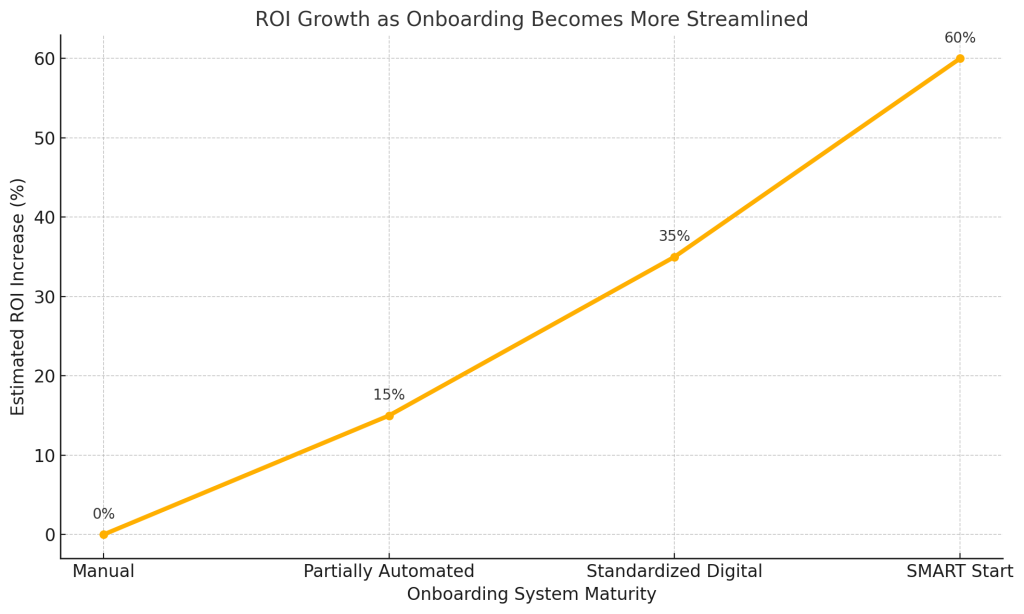
That is the thinking behind SMART Start™. Its purpose is not simply to place information online. It is to make onboarding more consistent, reduce training time, and help new employees become productive sooner.
Now consider a school district, nonprofit, or regulated organization using spreadsheets, binders, and email reminders to manage compliance training.
The need is not merely “new compliance content.”
The priority may be reliable completion, documentation, policy understanding, and audit readiness.
A strategic recommendation could include automated assignments, role-based learning paths, interactive policy training, assessments, expiration tracking, and real-time reporting.
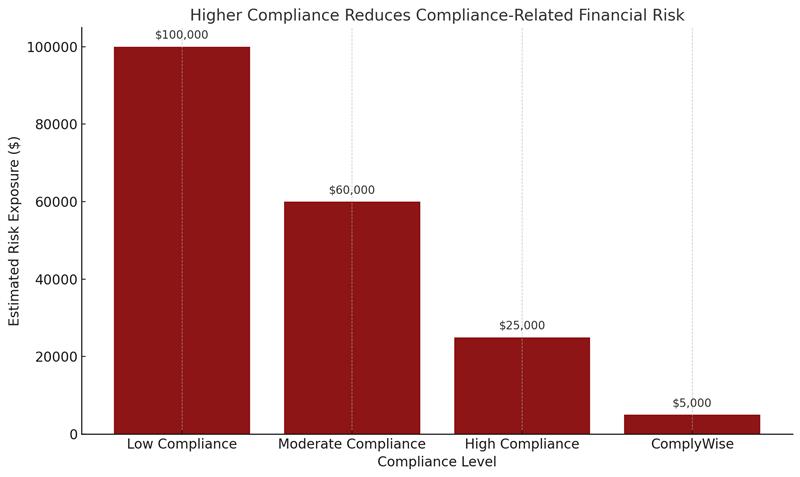
That is the type of business problem ComplyWise™ is designed to support. The value is in reducing risk and administrative effort while creating a clear record of completion.
In both examples, the course is only one part of the solution.
The larger opportunity is to design a training system that fits the organization’s work.
The Difference Between a Vendor and a Strategic Partner
A vendor waits for instructions.
A strategic partner helps clarify the right instructions.
That does not mean taking control of the client’s decisions. It means bringing enough structure and expertise to improve the conversation.
You become a strategic partner when you:
- Lead with the business problem
- Use evidence instead of assumptions
- Prioritize before proposing
- Explain your reasoning
- Connect learning to performance
- Anticipate implementation needs
- Define how results will be measured
- Adjust your recommendation when new information emerges
This is especially important for course creators moving into B2B work.
Your subject-matter expertise may have opened the door. But expertise alone will not carry the meeting. Decision-makers need to understand how that expertise can help them reduce cost, manage risk, improve performance, or support a larger organizational goal.
That is where the bridge between course creators and HR or L&D decision-makers becomes valuable.
At Kat The Course Builder, we approach custom eLearning and training systems through that bridge. The work begins with the organization’s needs, not with a predetermined list of deliverables. The final solution may involve custom content, automation, assessments, a branded portal, reporting, or a combination of services.
The recommendation follows the priority.
Not the other way around.
Before Your Next Meeting
Take these five steps:
- Research the organization. Review its workforce, industry, growth, compliance, and operational context.
- Identify the likely business pressure. Look for signs of turnover, inconsistency, risk, delays, or capacity problems.
- Prepare three evidence-based observations. Be clear about what supports your perspective.
- Recommend one logical starting point. Avoid presenting every possible service.
- Define the next decision. Make it clear what information, approval, or action is needed after the meeting.
You do not need to walk into the room with every answer.
You do need to show that you can help the people in the room make a better decision.
The meeting is access.
Alignment comes from showing that you understand the business, can prioritize the need, and have a clear reason for the path you recommend.
That is how course creators move beyond being considered for a project. They become trusted partners in solving the problem behind it.